

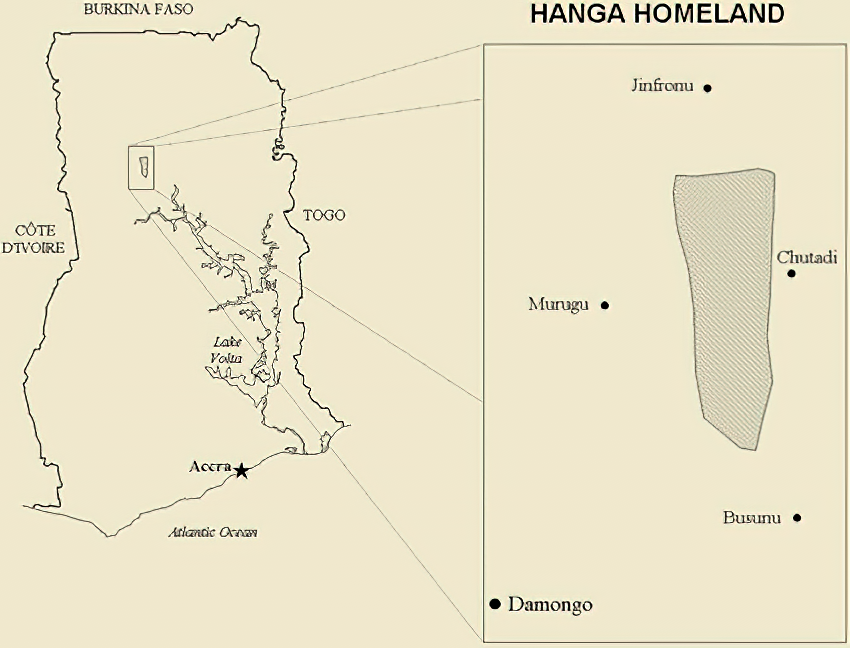
The Hanga people live in an area about 500 square kilometers in size. The area is roughly in the center of Dagombe district, some 20 to 50 kilometers North-east of Damongo, Ghana.
The Hanga of Ghana, numbering approximately 7,500 people (Peoplegroups.org, 2026). They are an Indigenous people, in the Gur people cluster of the Sub-Saharan African affinity bloc. Their primary religion is Ethnoreligion - Animism.
The Hanga are farmers whose main crops are yams, millet, guinea corn, maize, groundnuts, neri and cassava. The family farms in a group. The Tsetse fly and lack of good pasture prevents the rearing of cattle. Some Hangas migrate in search of better farmland.
Though there are varying accounts of origin it seems to be agreed that the Hanga came from the west, perhaps near Bole of from Bouna (nearly 20 miles the other side of the Ivory Coast border).
The area was an important Muslim and commercial center, being on an important trade route from Bouna and Bole to Salaga and Yendi. With the creation of a border between Bouna and Ghana trade routes changed and the areas importance declined. Islamic activity has also reduced with the centers decline. There are very few churches in the area and Christianity has yet to make an impact.
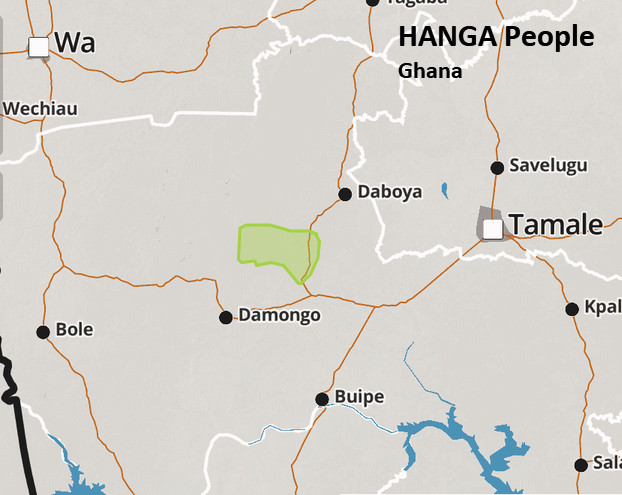
Hanga is a Gur language of Ghana. The people of Hanga are found in the Savannah Region of Ghana.
The Hanga-speaking people live mainly in the Northern Region of Ghana, in the town of Damongo and thirteen villages mainly to the north of Damongo. Most of these villages can be accessed via a western road going north from Larabanga. Three villages are on an eastern road going north from Busunu and two other villages are on the Busunu Damongo road. The total number of Hanga people as recorded in a recent census, was about 10,000.
Sources: