

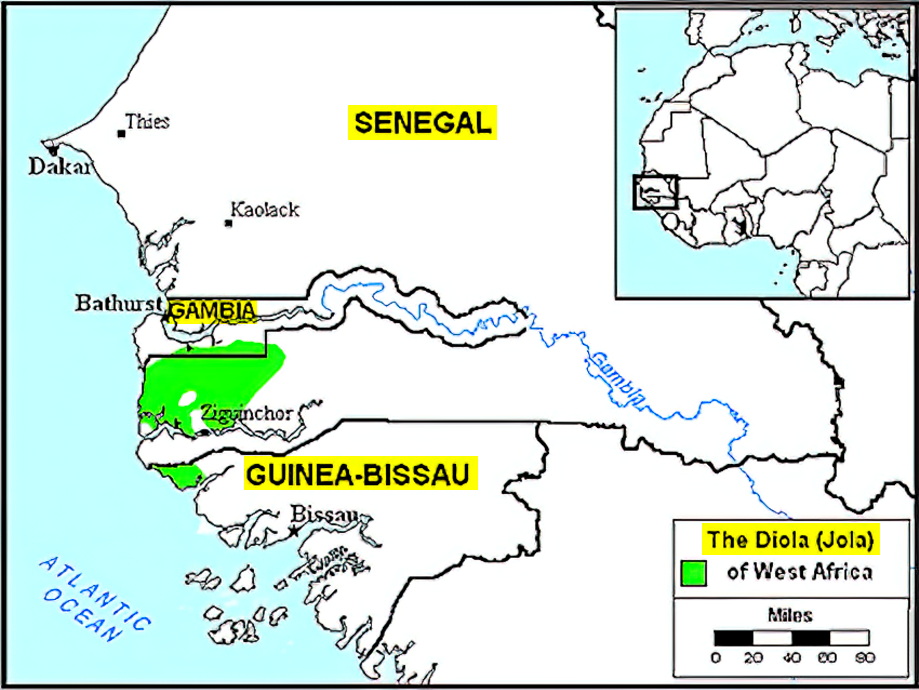
The Diola or Jola (endonym: Ajamat) are an ethnic group found in Senegal, Gambia, and Guinea-Bissau.
Most Jola live in small villages scattered throughout Senegal, especially in the Lower Casamance region.
The main dialect of the Jola language, Fogni, is one of the six national languages of Senegal.
Their economy has been based on wet rice cultivation for at least one thousand years. This system has been characterized "one of the most significant examples of 'agrarian civilizations' in West Africa". However, the Jola probably reached the Lower Casamance region in the 14th century, assimilating the previous Bainuk people and their rice tradition.
In colonial times, the Jola began to cultivate peanuts as a cash crop in the drier forests.
The Jolas (Diula, Yola, Dyola) are a major ethnic group in southwestern Senegal. Their total population exceeds 700,000, with approximately 140,000 in the Lower Casamance area of Senegal, 500,000 more scattered through Senegal, and as many as 70,000 in Guinea Bissau and Gambia. Others live in Mali and Burkina-Faso.
The term "Dyula" in Manding refers to an individual skilled at trade and business, but its specific ethnic designation refers to a people who today live in the northeastern and northern sections of Ivory Coast, in southwestern Burkina-Faso, and across the border in Ghana, Guinea-Bissau, and Mali.
The word 'Jola' is the Mandinka name for this ethnic group and means 'payback', since Jolas are renowned for doing back what's been done to them, be it a good or a bad deed. The name of the Jola tribe in their own language is Ajamat (singular) or Ajamataw (plural). 'Diola' is the traditional transliteration in French, which is also very common in English sources.
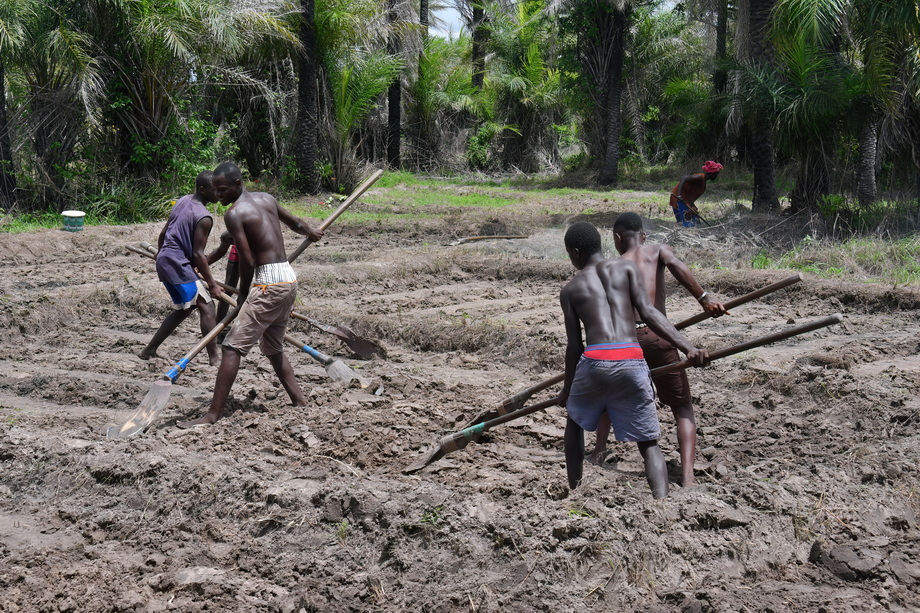
The Jolas make their living through wet rice agriculture in the wet lowlands and tidal streams of the coastal area and through raising peanuts in the drier forests.
Other activities include palm wine tapping, honey collecting, livestock rearing and the production of oher crops such as sweet potatoes, yams and watermelon.
Traditionally, the Jolas lived in extended families, but the expansión of the commercial economy in Senegal has undermined village-wide property models in favor of nuclear families. Increasing numbers of the Jolas are leaving their villages for wage labor in the cities.
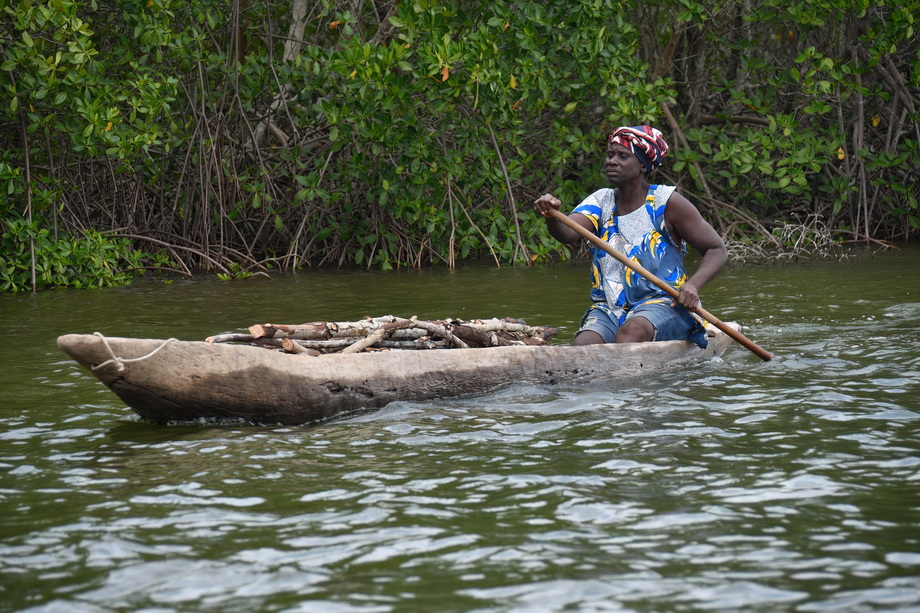
The Jolas are divided into a complex variety of subgroups based on linguistic and ethnic patterns. Ethnolinguists classify them as one of the Bak group of the West Atlantic language family.
The Jola speak the Jola language, which is divided into a variety of dialects which may not, at times, be mutually intelligible. These dialects correspond to the different Jola tribes:
The traditional religion of the Jola is animism, which is practised through fetishistic rituals and ceremonies. However, the Jola populations living in well-connected areas have become Islamized due to the influence of the nearby Mandinka people. As a result, many Jola no longer speak their own language and more than half are now Muslims. Unlike the dominant cultures of West Africa, most Jola communities lack any social or political stratification, being organized into families or neighborhoods.
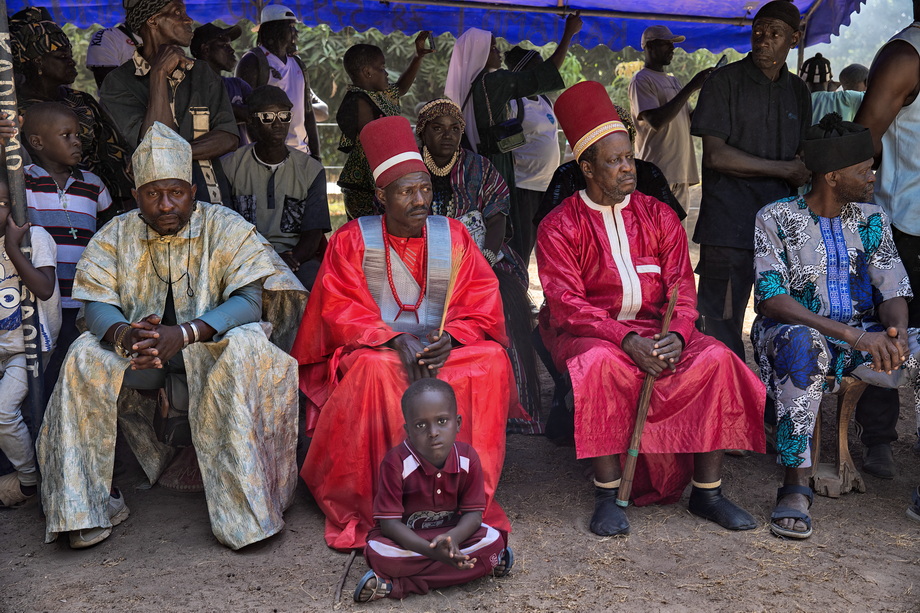
However, some communities have a central authority, a King, whose role resembles more that of a priest than of a traditional secular leader. The most prominent Jola Kingdom is in Oussouye. Among the Muslim Jola, there is also the Marabout, a religious leader and teacher. Traditional animist rituals are overseen by elders, who have an important role in Jola society. For Jola boys to attain manhood, they must take part in the initiation festival known as futamp, which takes place every 15 to 20 years in every Jola village.
Islam never reached them, and, although Roman Catholic mission-aries baptized many of them, the indigenous religious practices survived. The religión is animistic and revolves around shrines that the Jolas cali sinciati.
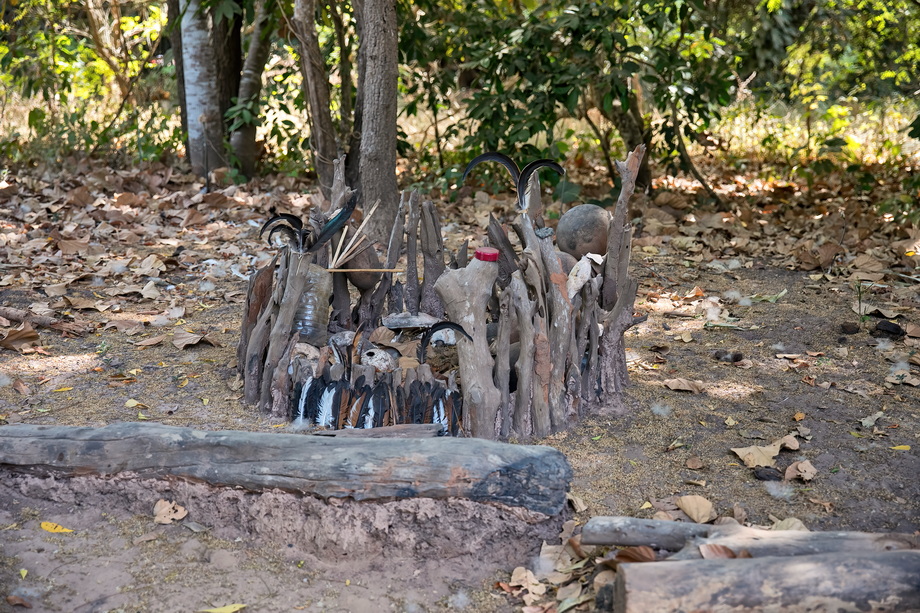
Most Jolas continue to follow their traditional religion and rituals in spite of the influence of Islam and Christianity in recent times. Even though some accepted Islam after the Soninke-Marabout war, they honour the traditional use of palm wine in their rituals. They have one God that they associate with the natural phenomena like sky, rain, and the year, Emit or Ata Emit, literally, "To Whom Belongs The Universe" or "The Master-Owner Of The Universe". They have charms and sacred precincts that they honour and with which they communicate (but do not worship). The Jola people believe that spirits called Bakin or Eneerti (Mandinka Jalang) can protect their families, their villages, and their rice fields; and can even protect them from conversion to Islam and Christianity.
Before the influence of Islam and Christianity in their ways of beliefs, all Jolas placed great respect in the proper observation of funeral ceremony, and still today some do, for they are of the belief that it enables the dead person's soul to go to its final destination to join his or her ancestors. It was and still is strongly accepted by those Jolas who still practice their ancestral religion that without performing these funeral sacred rites, the soul is prevented from entering the presence of the creator (Ata Amit), and the ancestors. Jolas believed strongly in living a good humanistic life in this world. They believe that if one lives a bad life in this world, when the person dies the soul of the dead person is punished to become an exile spirit with no bed to lie on. In the Jola Cassa subgroup this exile spirit is called a Holowa. This exile spirit becomes a roaming spirit with no respect from the other spirits.
Some Jola religious festivals include the Samay, Kumpo and Niasse.
Unlike most ethnic groups of the Senegambian region, the Jola do not have caste system of Jewels griots, slaves, nobility, leather workers, etc. Their communities are based on extended clan settlements normally large enough to be given independent names, including the:
Jolas are also able herbal medicine practitioners. Their high adaptation to the nature and environment allowed them to be able to create musical centred civilisation, natural medicine centred civilisation, and most important of all, rice cultivation centred civilisation which they do effectively by using a locally made farming tool called the kajando.
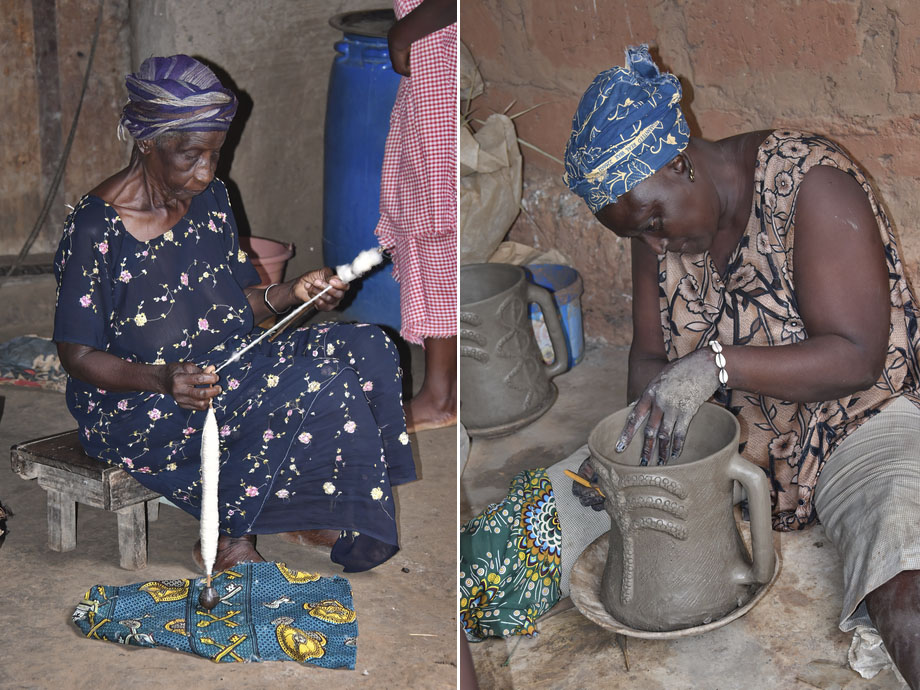
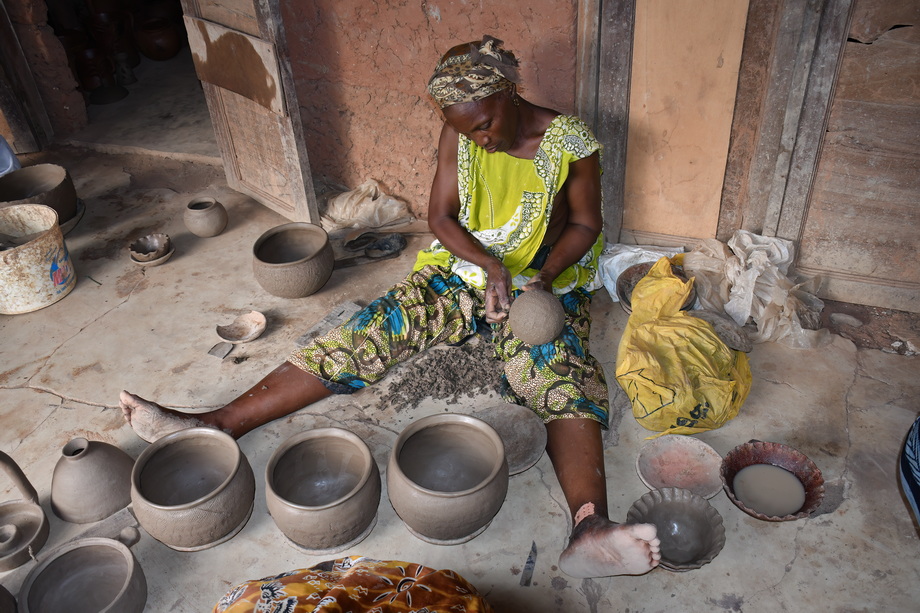
Like some of the other the indigenous ethnic groups of the Senegambian region—the Baga, the Balanta, the Konyagi, etc.—, the Jola ethnic group did not develop a political scale that expanded beyond village level compared to ethnic groups that migrated to the region like the Sonike and the Mandinka. But this does not mean they did not develop a sophisticated political system. The egalitarian nature of their societies (rare in most societies), structured around the limited village environment gave them the possibilities to develop a political system based on collective consciousness, which they worked through their initiation rites. In a sense the Jolas' political achievement in the village was socialism. It was totally tied to their religious belief in the Bakin. This political achievement is not easy to reach if the society that runs it does not have well-defined rules of administration and penalties. Jolas have many traditional economic activities like fishing, farming groundnuts, tapping palm wine, and processing palm oil: their most intensive economic activity is rice cultivation, which is tied closely to their religion and social organization. Jolas are also palm oil manufacturers and palm wine tappers in the Senegambian region. They farm cows, pigs, goats, chickens, sheep and ducks. Jola crafts include basket weaving, pottery, and building.
Elders are considered very important in Jola society and are believed to possess occult powers and guard societal traditions. In villages, a council of elders make many of the daily decisions for the community and exert much influence. Despite the patriarchal nature of Jola society, many women played major roles in the community and were often members in village councils, religious leaders, and landowners. Women are also important as cultivators of wet rice fields in which they predominated. Polygamy and genital mutilation are not practiced by the Jola although outside influence has made these more common in certain villages.
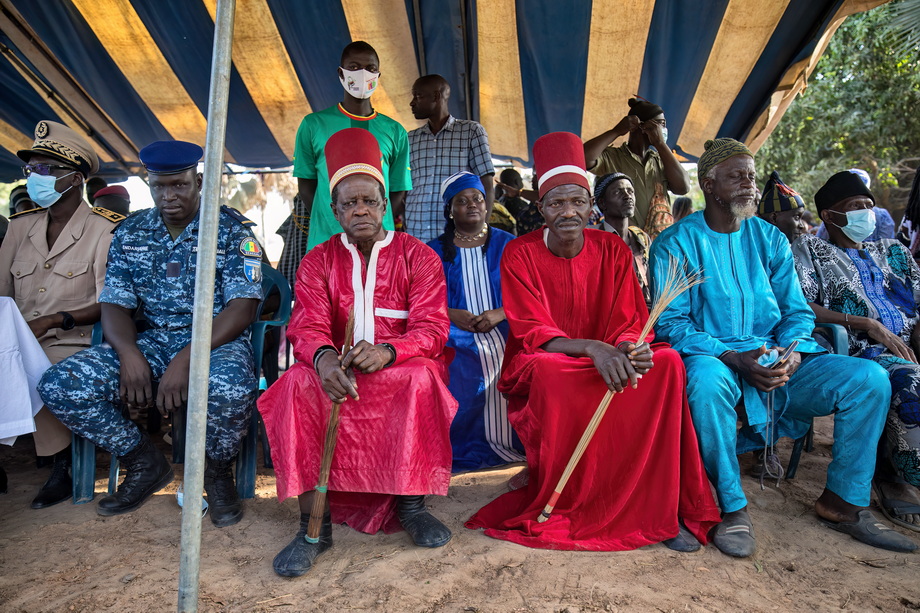
The Diola political system is best understood as decentralized, community-based, and consensus-driven, rather than hierarchical or state-centered.
1. No centralized kingship or strong chieftaincy
Unlike many neighboring societies, the Diola traditionally did not develop large kingdoms or powerful chiefs. There is no single ruler over a wide territory. Authority is instead spread across small communities.
2. Village autonomy
Each village functions as an independent political unit. In regions like Casamance in Senegal, villages make their own decisions without external control. This makes the system highly localized and self-governing.
3. Council of elders
Leadership typically lies with a council of elders, made up of respected, experienced men (and sometimes influential women). They:
4. Age-grade and initiation systems
Social and political organization is strongly influenced by age sets and initiation groups. These groups:
5. Religious and spiritual authority
Spiritual leaders—such as priests tied to shrines or ancestral traditions—play an important political role. Among the Diola, religion and politics are closely linked, and decisions often require ritual approval.
6. Egalitarian values
The system emphasizes:
The ekonting is a three-string gourd instrument, the folk lute of the Jola people. It has an internal pass through body dowel stick with a round gourd body and its sound box is made of a hemispherical calabash, with a nailed goatskin. Before the invention of nails, palm tree thorns or wood pegs were used as nails. The three strings, which are attached to a long neck, today are nylon fishing line. Before, they were made of palm tree roots (Jola language: kuhall kata kubekel). The neck is a bamboo stick (Mandinka language: bangoe) that passes through the calabash to the other side. A hole is made in the sound box to allow the sound to escape. The bridge of the ekonting is not fixed to its skin as many lutes are. It is free, and can be moved back and forth on the skin of the sound box and it is always held in position by the pressure of the strings when it is in playing position.
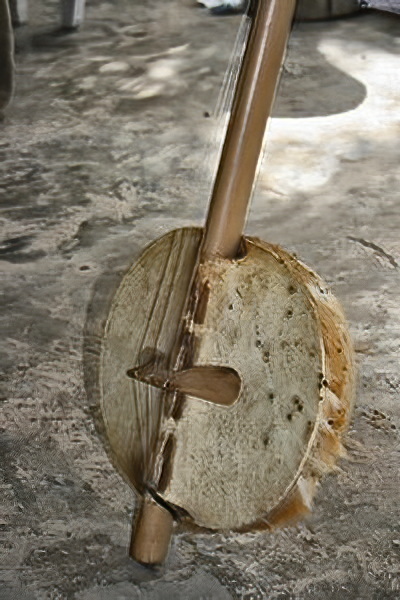
The galire is a one-string instrument of the Jola of Thionck-Essyl, with its strings stretched across a single 1 meter curve made of fine mangrove wood. At first sight, it looks like a hunter's bow
It's played with one hand holding a flexible fine string (made of palm leaves) beating on the arc's string, while the other hand holds one end of the arc and adjusts the tune with the thumb. The other end of the arc rests in the mouth of the player, who sings. The vibration from the player's song on the string of the arc and the beating with the fine flexible string leads to the pleasant and characteristic sound of the galire.
The exile of young people to cities has led to the stark decline in usage of this traditional instrument among the Jola people of Casamance and the Gambia.
Below is a list of few Jola instruments. Note: The Jola language of Thionck Essyl is used to name them. Their names may differ somewhat in other villages' languages.
1. Ekonkon. This is the most famous and representative dance of the Diola. It is performed during community festivals and post-harvest celebrations. It is a dance of endurance and strength. Both men and women wear raffia skirts or fringed fabrics. Dancers jump and move their legs with great energy to the rhythm of fast drums. It serves to demonstrate the vitality and cohesion of the people.
2. The Gamo. This dance is closely linked to traditional wrestling, which is the national sport in the region. It takes place before and after wrestling matches. Wrestlers enter the arena dancing to intimidate their opponent and invoke the protection of their ancestors. The village women accompany them with songs and rhythmic hand-clapping.
3. Rice Cultivation Dances. Rice is sacred to the Diola, and much of their folklore revolves around its agricultural cycle.
4. Women’s Dances (Ehougna and others). Women play a crucial role in preserving Diola culture. Ehougna is a solemn dance performed by elder women and mothers. They often use fans or scarves and move with a contained elegance. It is used to celebrate the appointment of female leaders or in rituals for fertility and the protection of the home.
5. Njicoul (Funeral Dances). Although it might seem contradictory, death is commemorated with specific dances.These are rhythmic but slower-paced dances, where tribute is paid to the life of the deceased and their soul is helped to transition into the spirit world
6. Key Instruments. None of these dances would be possible without:
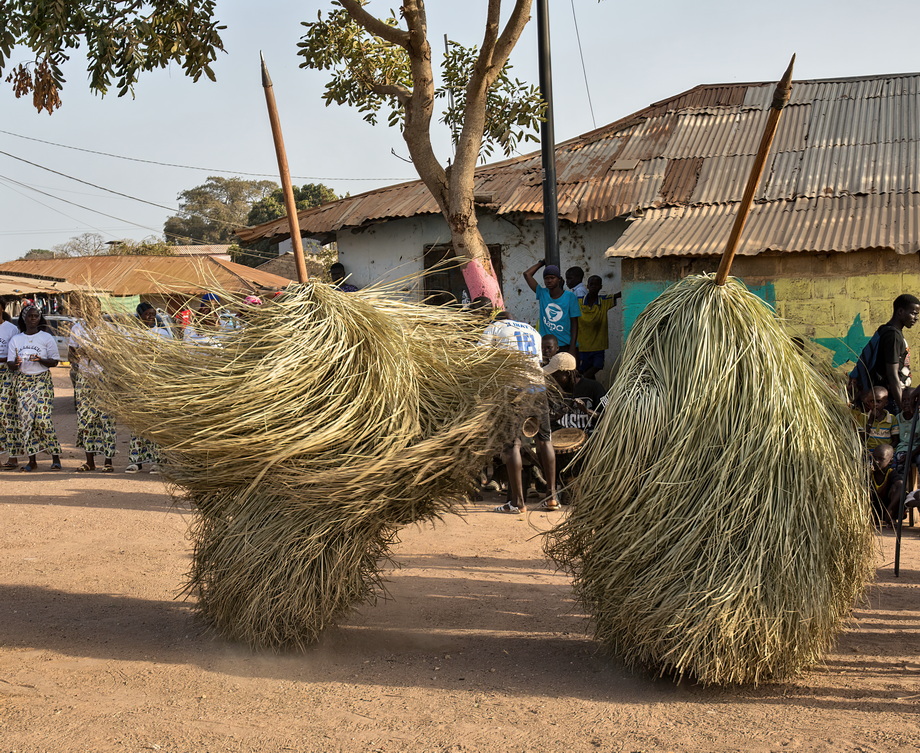
Diola (or Jola) masks are not considered mere artistic objects; they are perceived as the materialization of protective spirits of the forest and the community. These figures play a fundamental role in social regulation, maintaining order, and providing spiritual protection to the people of the Casamance region.
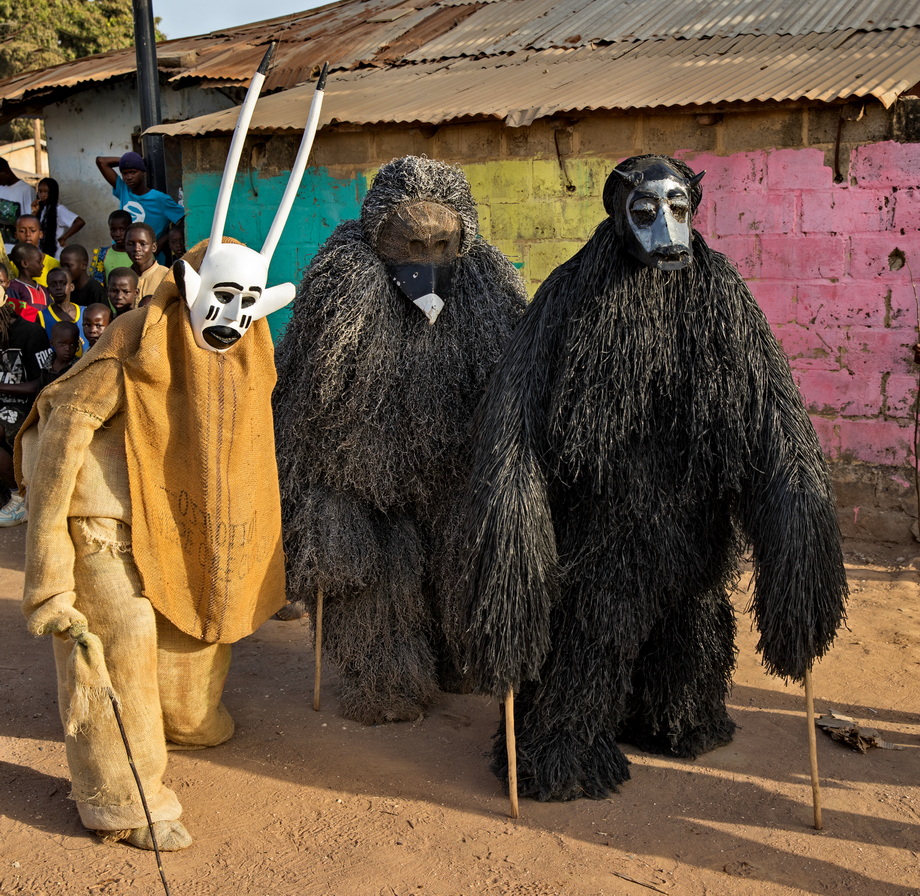
MASKS OF THE SPIRITUAL TRIAD. These three figures appear together to represent different aspects of Diola authority and morality:
1. Kumpo: The most sacred and recognizable spirit, completely covered by a conical structure of beige palm fibers or raffia. It is identified by a long pole on its head used to perform a hypnotic spinning dance. It symbolizes the protector of the community and the "communicator" of moral messages from the ancestors.
2. Samay: Acts as the "master of ceremonies" and wears a mask with deer horns. It is responsible for inviting the people to the festival and maintaining strict order using a long staff; it is believed to know everything happening in the village.
3. Niasse (or Ngomola): Has a more anthropomorphic appearance, often covered in black hair imitating a gorilla. It uses two short sticks to walk and has a more theatrical function, often scaring children or aggressively driving away evil spirits.
INITIATION and RITUAL MASKS. Beyond the triad, there are specific masks for critical moments in social life:
MATERIALS and SYMBOLISM
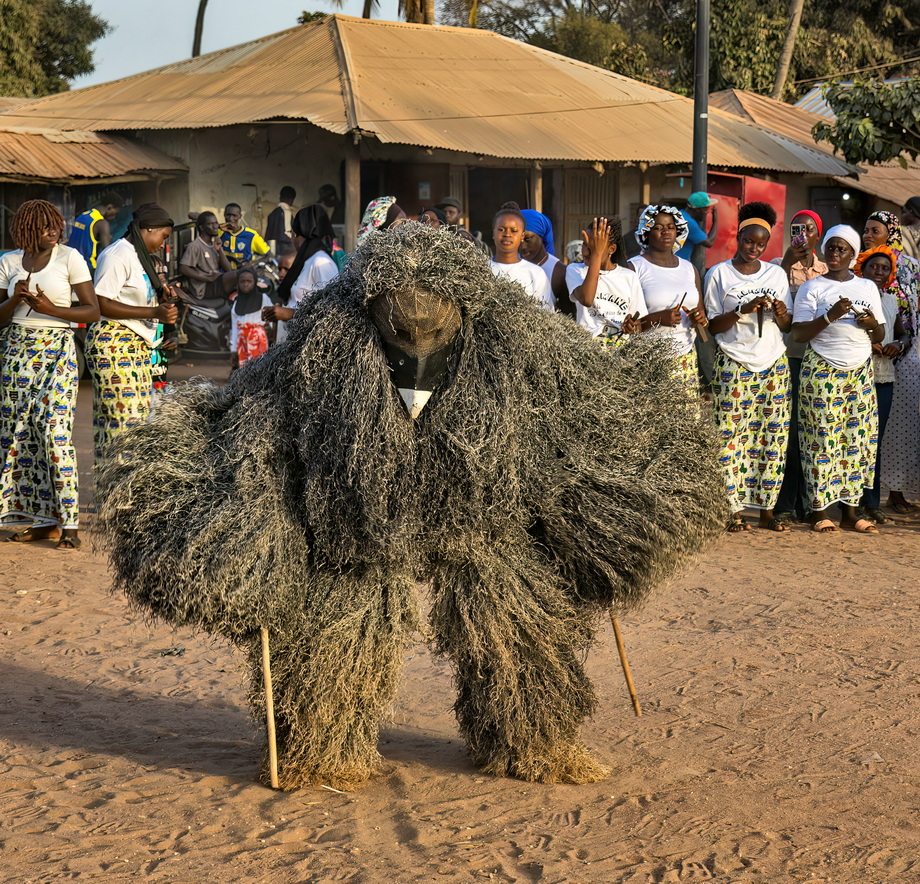
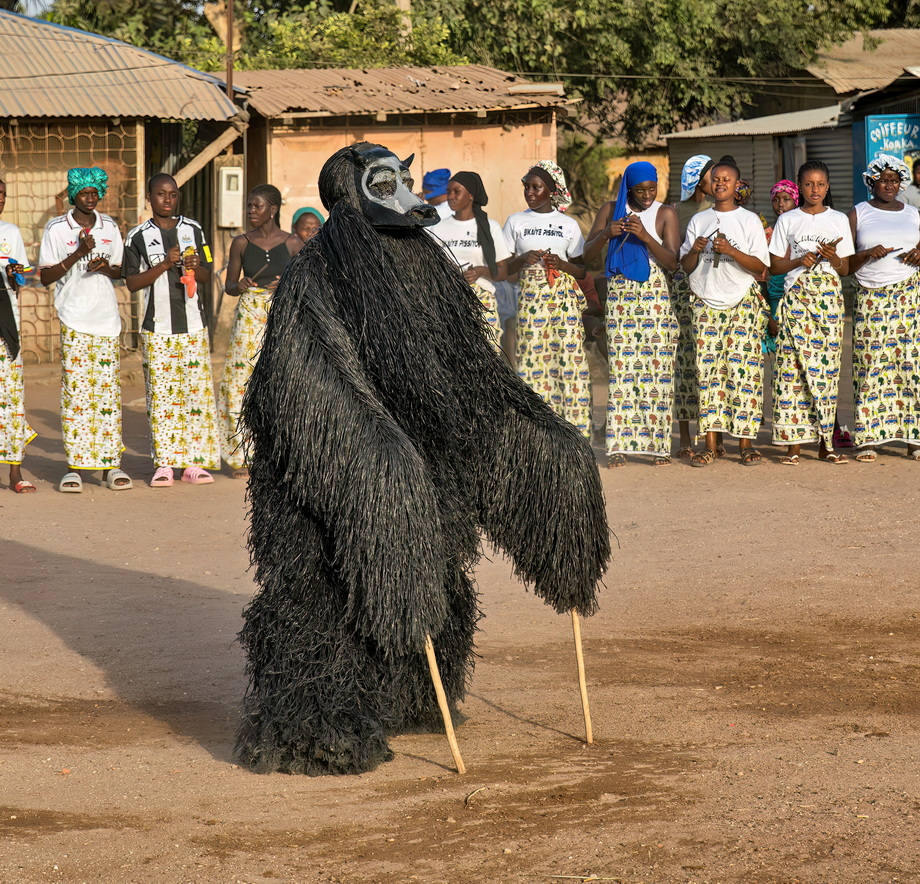
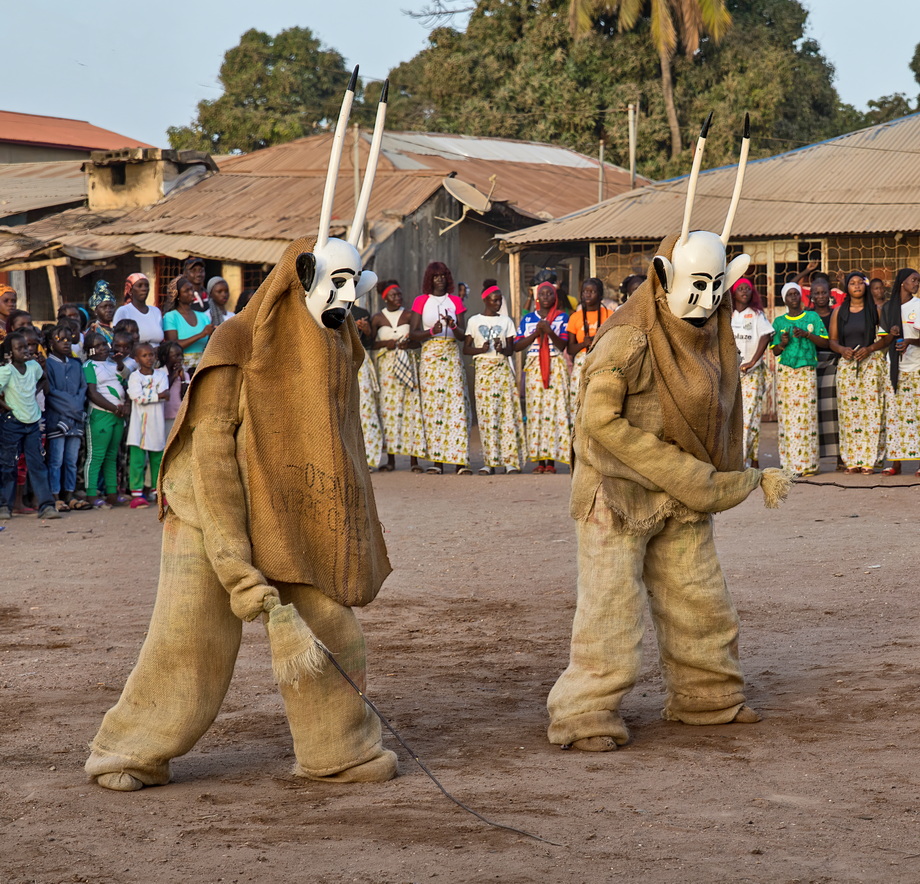
The Bukut (also known as Boukout or Futampaf) is the most sacred and transcendental male initiation rite of the Diola people in the Casamance region. This event does not have a fixed date; instead, it is celebrated approximately every 20 to 30 years in each village, when the elders identify mystical signs in nature.
PURPOSE AND MEANING
THE PROCESS OF THE RITE
MASKS IN THE BUKUT
While the youth are in the forest, spirits like the Kumpo, Samay, and Niasse appear to protect the community and ward off negative energies during this period of spiritual vulnerability. The Ejumba mask, made of woven fibers and animal horns, is also used specifically for certain moments of the initiation.
This variety of circumcision, exclusively for adults and called Kahate, is practiced in some villages of the Oussouye area, especially among Diola groups tied to the traditional kingdom.
The Kahate ceremony should not be confused with the better known and more documented BouKout ceremony.
Boukout
Kahate
Core villages in the Kahate cultural zone
While Kahate isn’t documented in a strict official list, ethnographic patterns show it circulates among villages in the Oussouye area (Lower Casamance), especially among Diola groups tied to the traditional kingdom.
These villages are part of the same ritual network and are likely hosts or participants over time:
The development of a Kahate ceremony follows these protocols
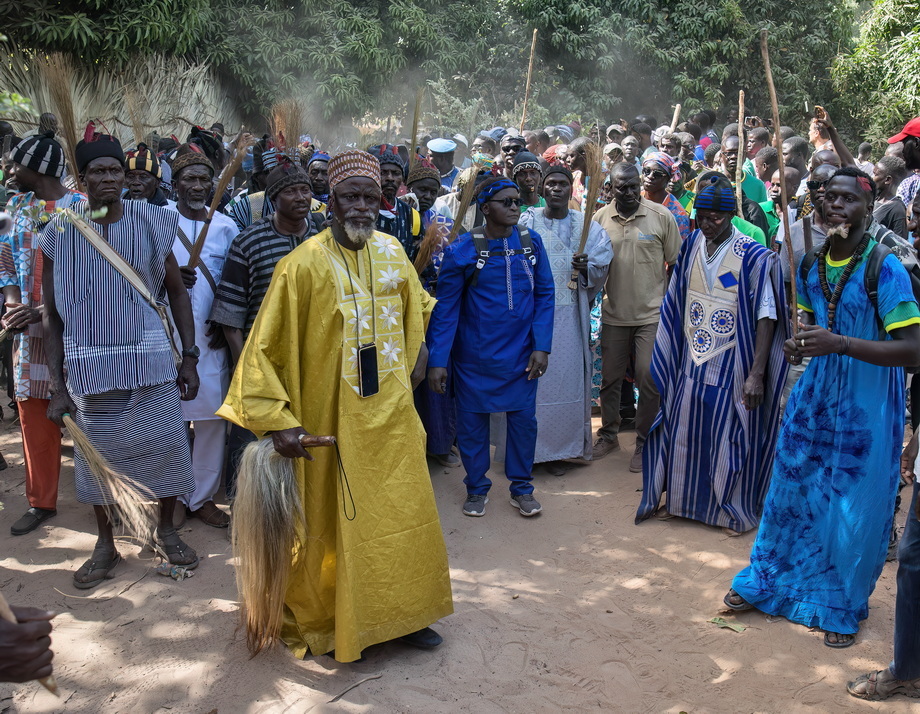
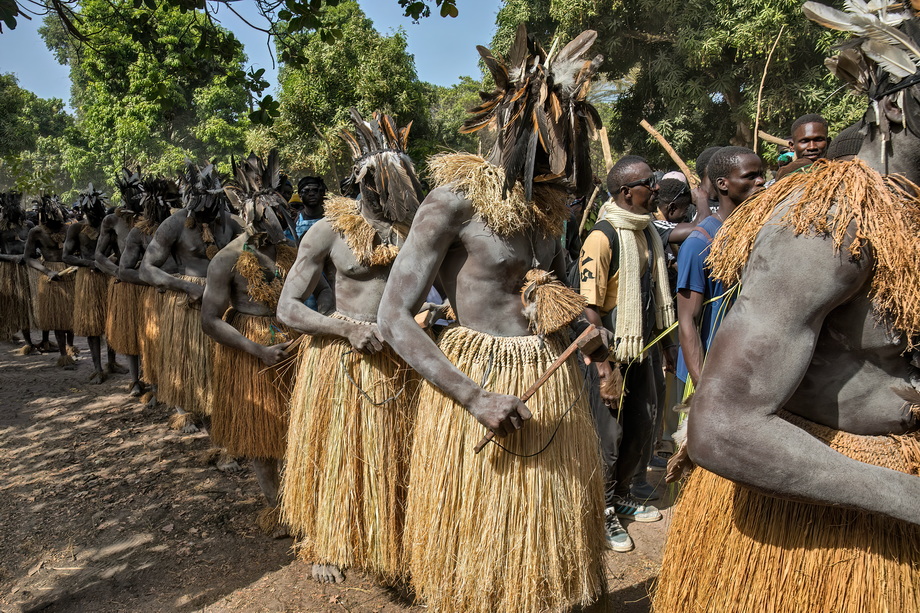
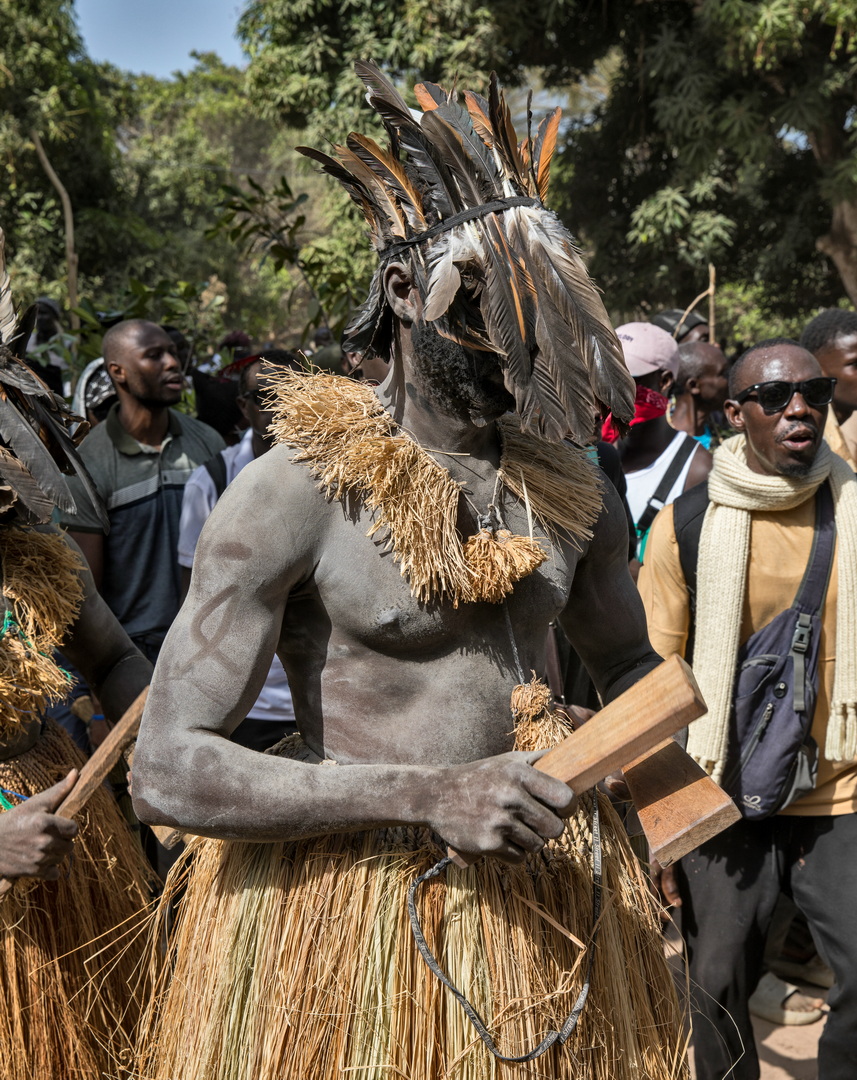
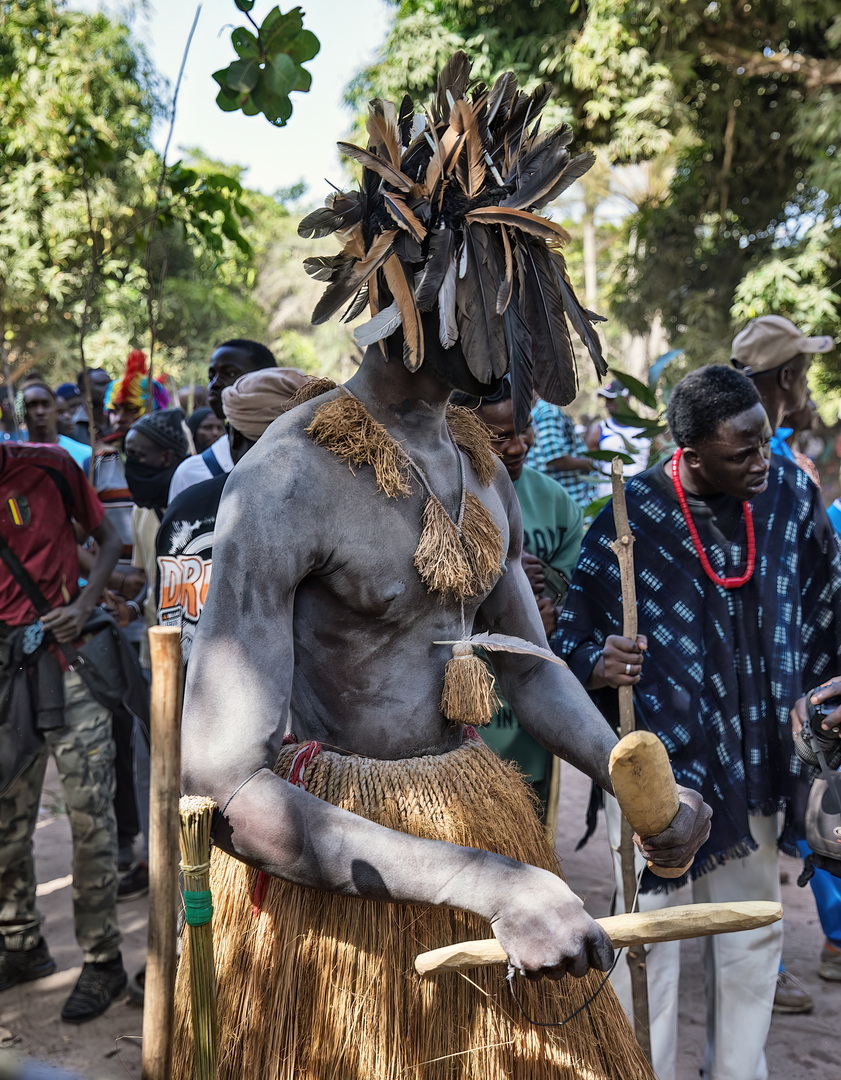
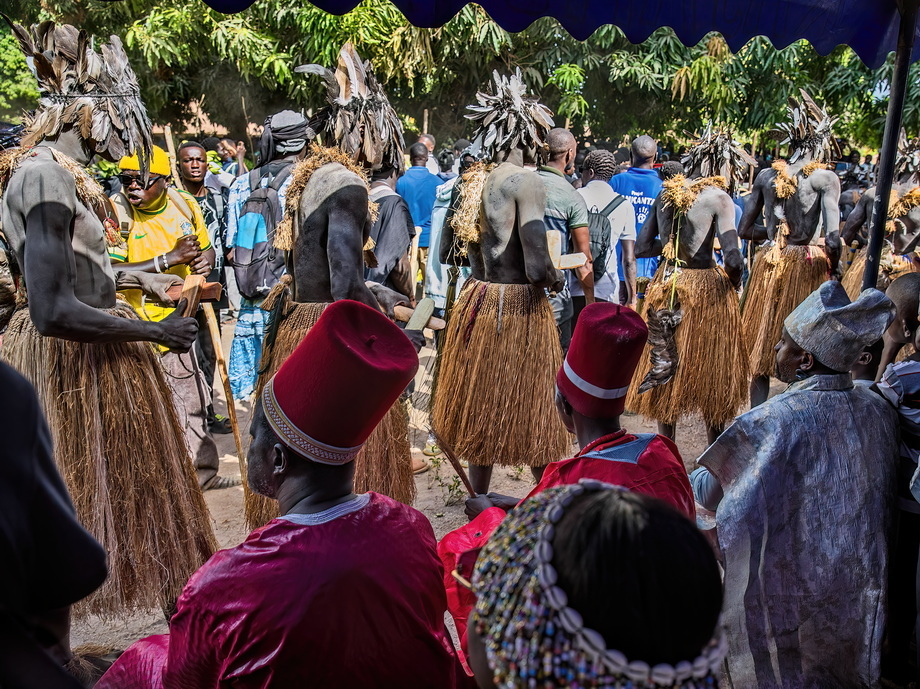
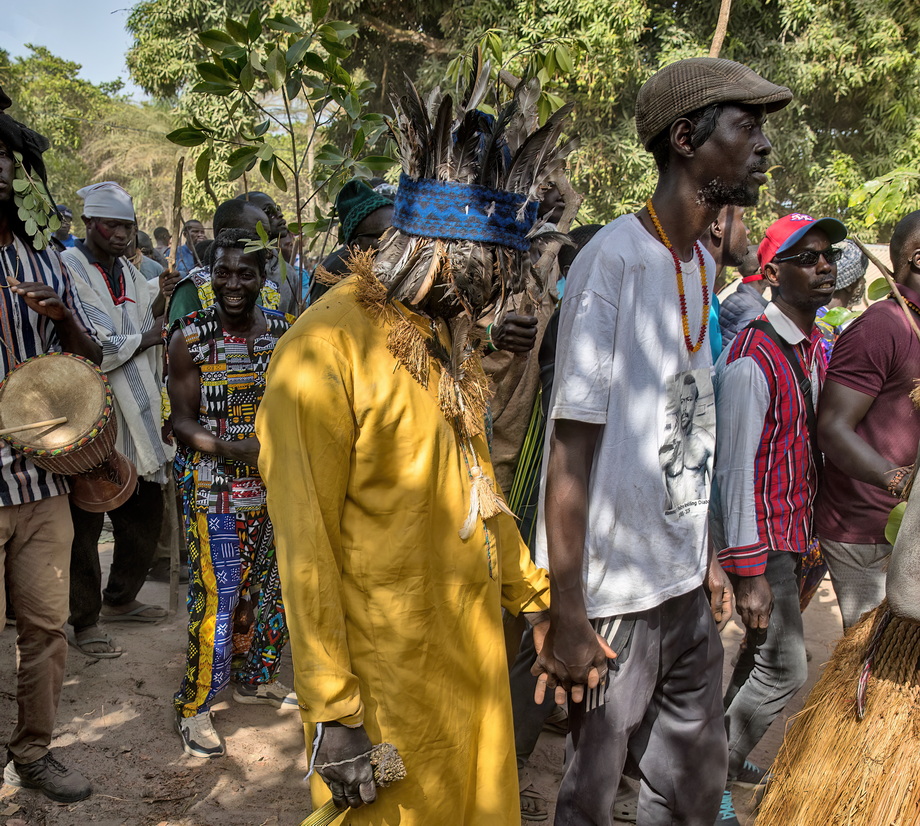
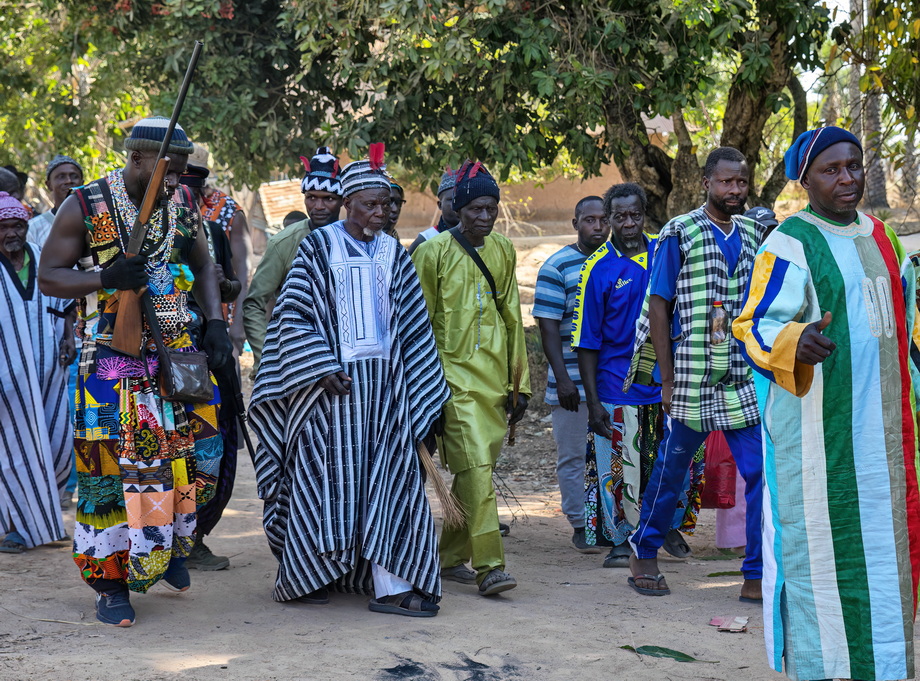
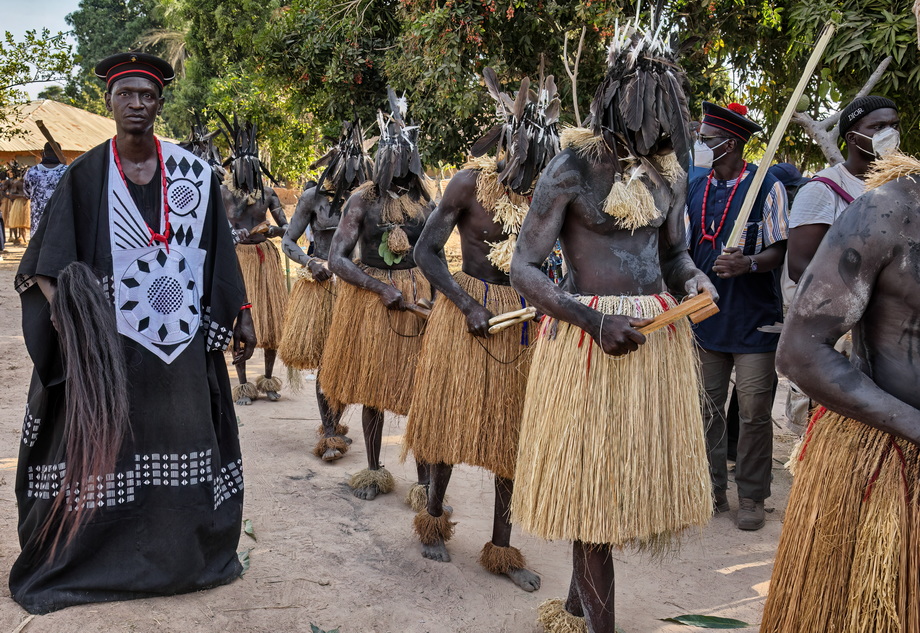
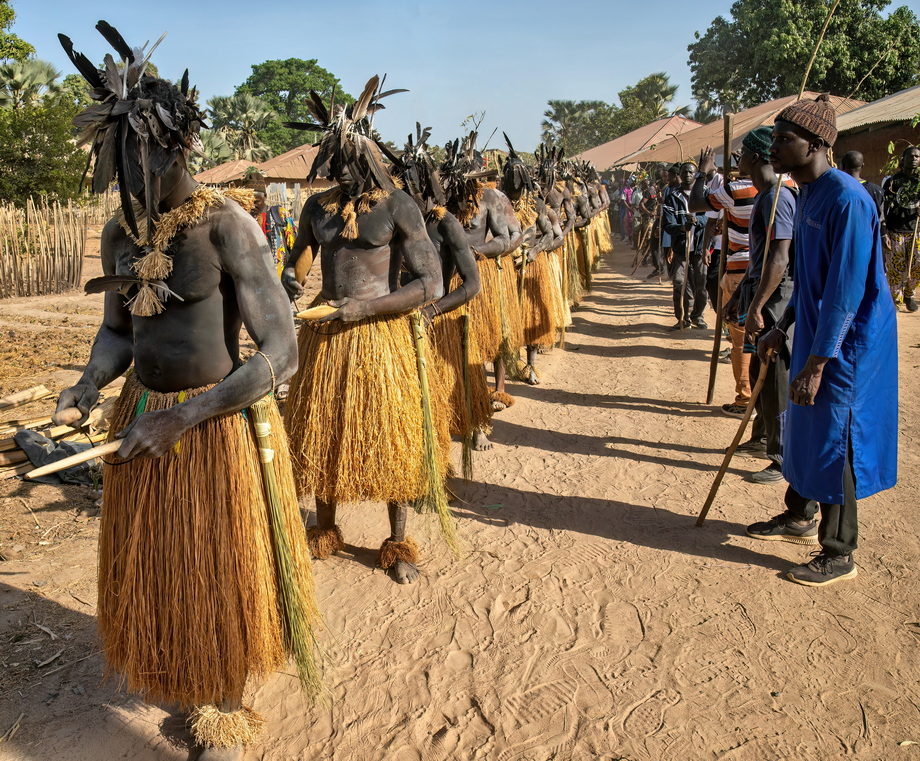
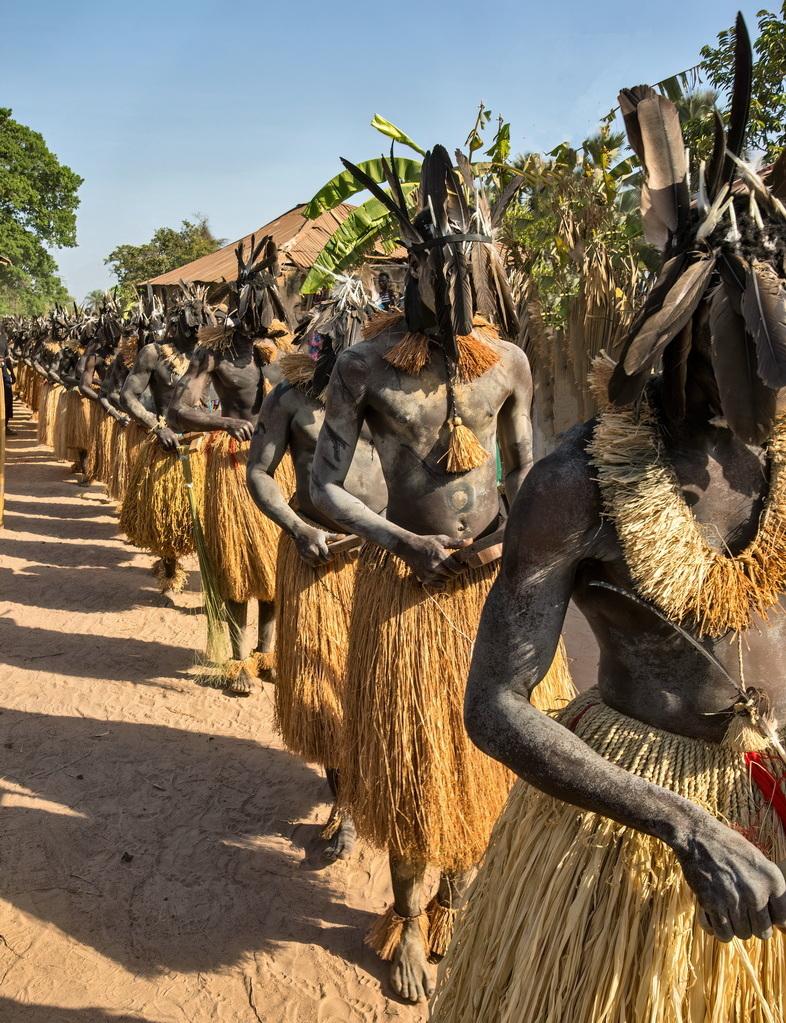
The Karahaye celebration among the Diola people, particularly for women, is a significant cultural and spiritual event. It is deeply tied to the traditional religious practices and community life of the Diola people.
The Karahaye celebration is not just a religious event but also a communal celebration that brings together different generations of Diola women, fostering a sense of unity and continuity within the community. It is an opportunity for the women to reconnect with their cultural roots, remember their ancestors, and celebrate their identity as women in the Diola society.
The Karahaye tradition is found in the regions where Diola communities live:
The Karahaye celebration does not follow a fixed date but the timing is ultimately determined by the spiritual leaders and community elders, who consider factors such as lunar cycles, seasonal changes, and ancestral guidance. In some cases, in the same community, it can be repeated with a time lapse of 30 years or more.
When the celebration takes place in a specific village, Diola women from different areas gather there.
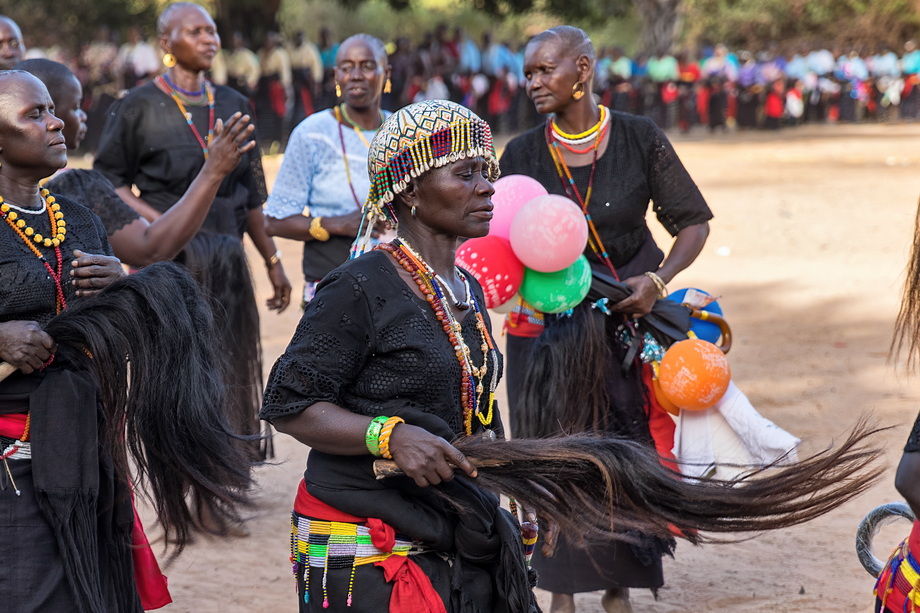
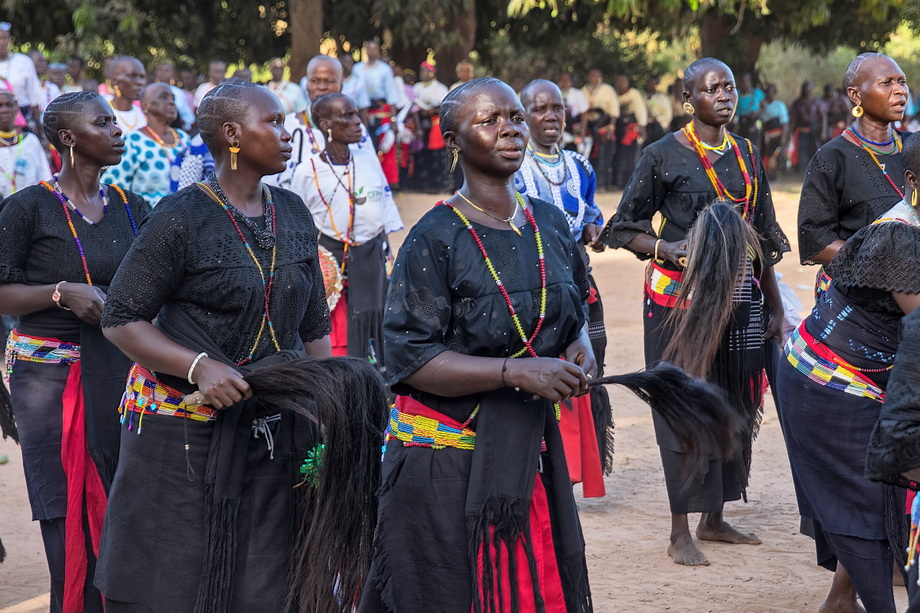
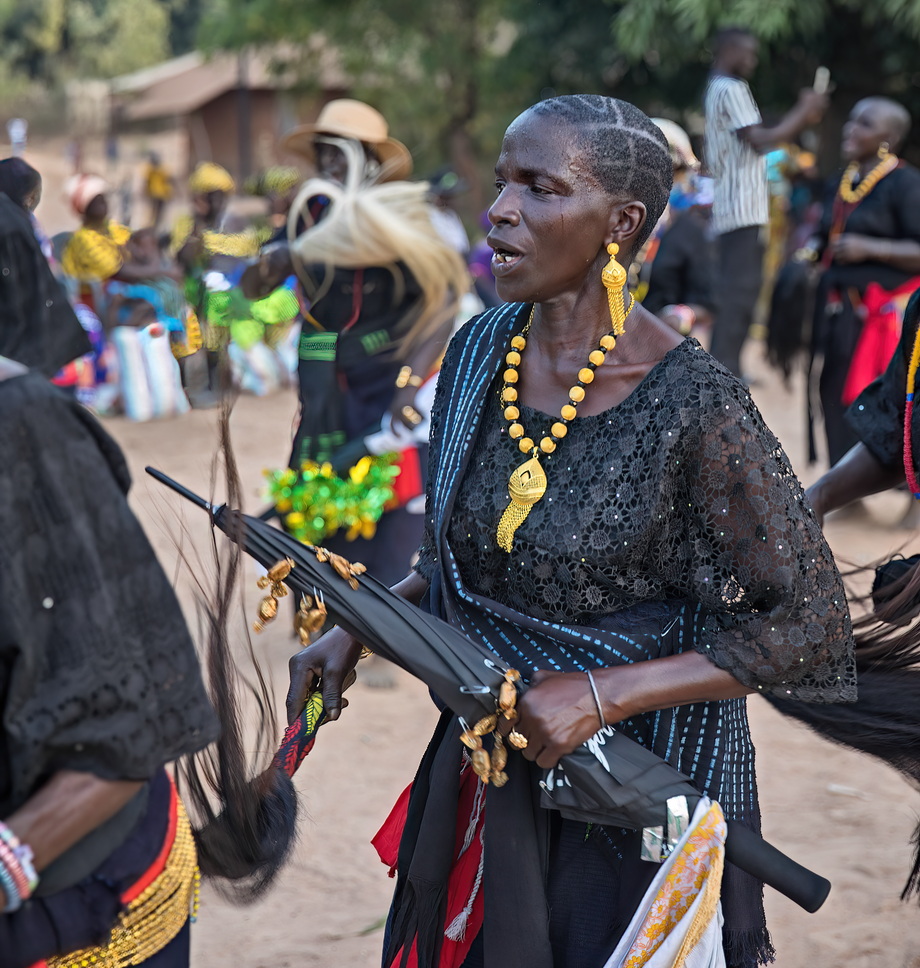
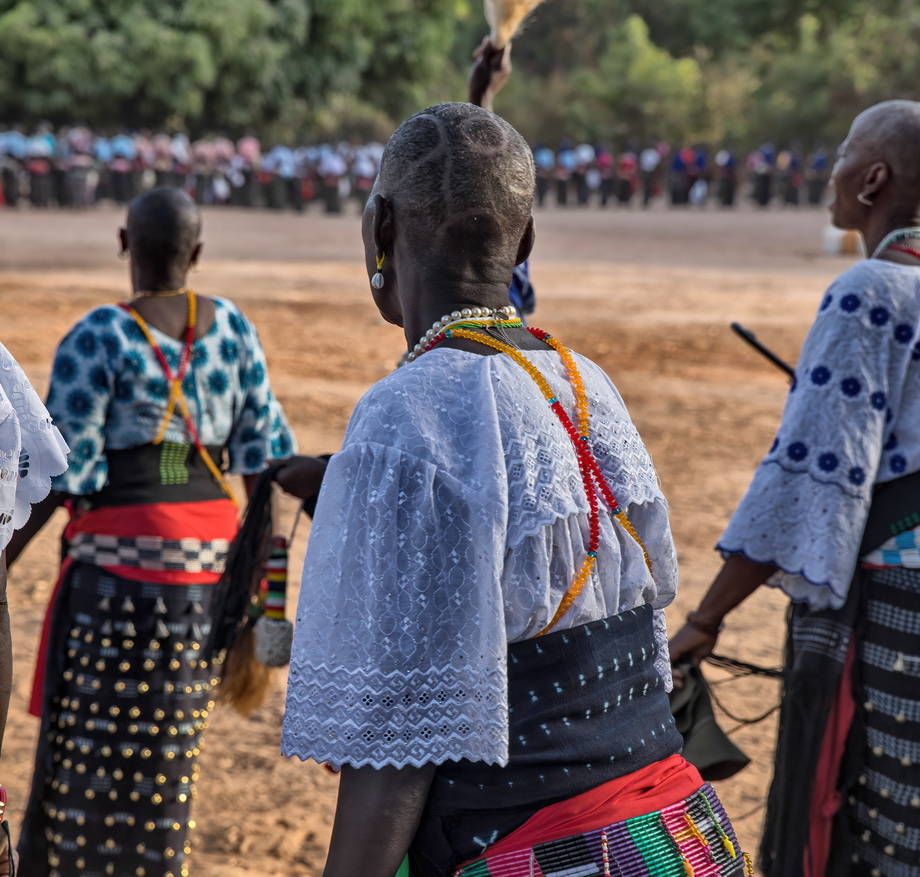
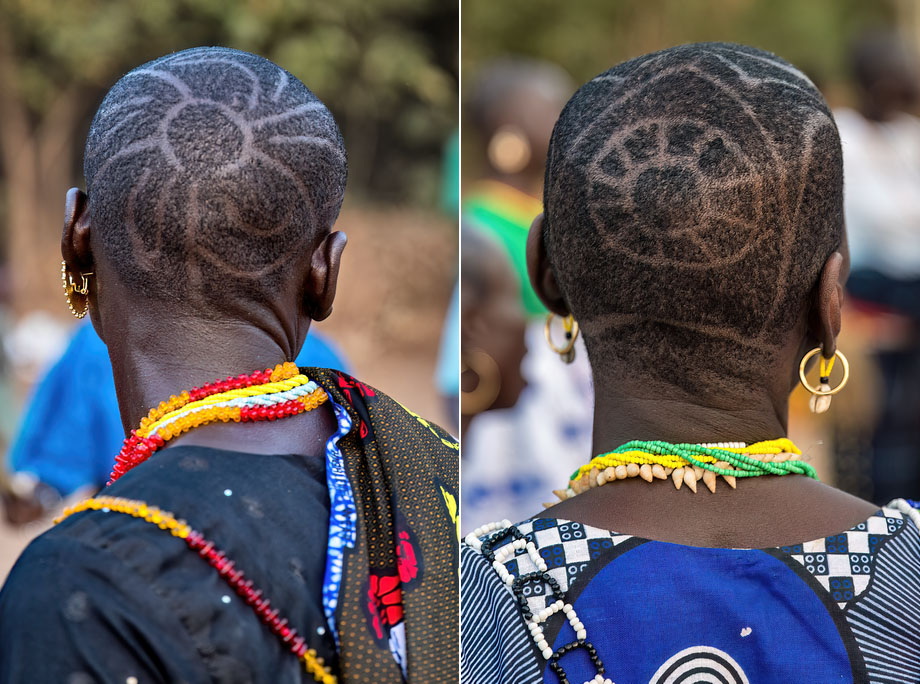
The women from the area where the celebration is held are distinguished from those from outside by shaving their heads almost completely, decorating them with artistic and geometric designs using shaved lines.
The celebration lasts seven days, and each day includes dances and various rituals.
Their most significant attire, besides their hairstyles, consists of long skirts adorned with bells and rattles that accompany their rhythmic movements, following the patterns of their songs.
A group of tam-tam percussionists, in the center, sets the rhythm for their songs and movements in a long, parallel double line. The women dressed entirely in black, who form a separate group, are the leaders of the celebration and head the procession of the other groups from different Diola areas.
Only women who have had children (or abortions) can participate in the celebration.
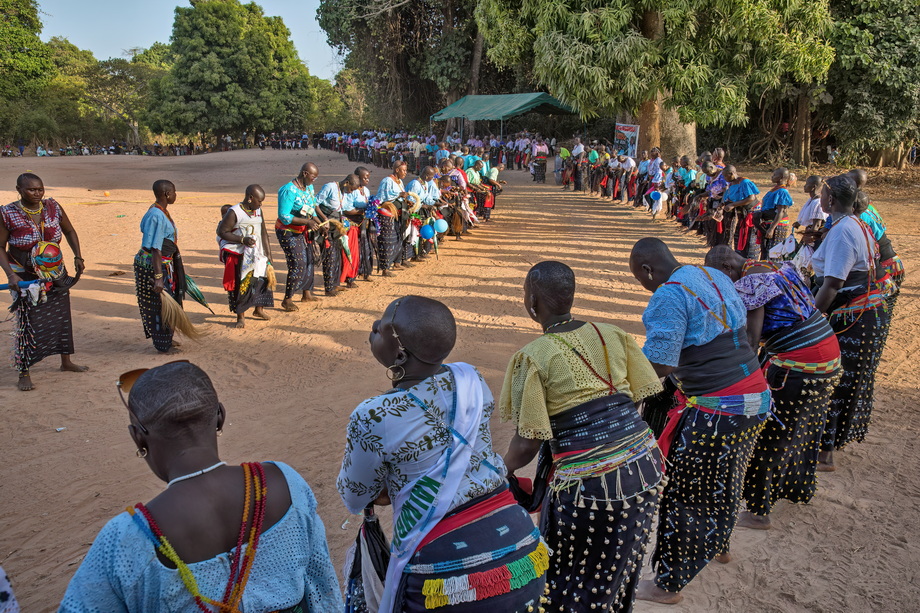
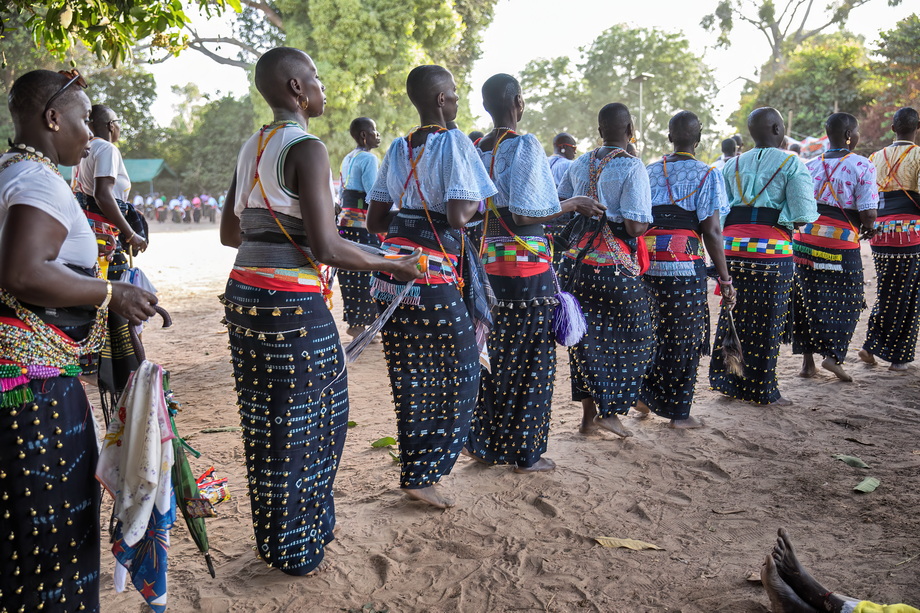
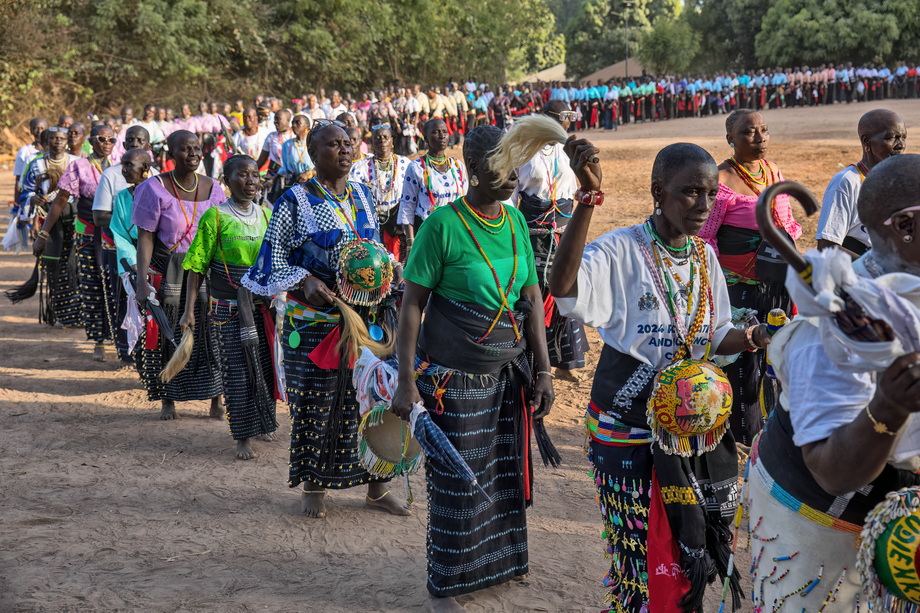
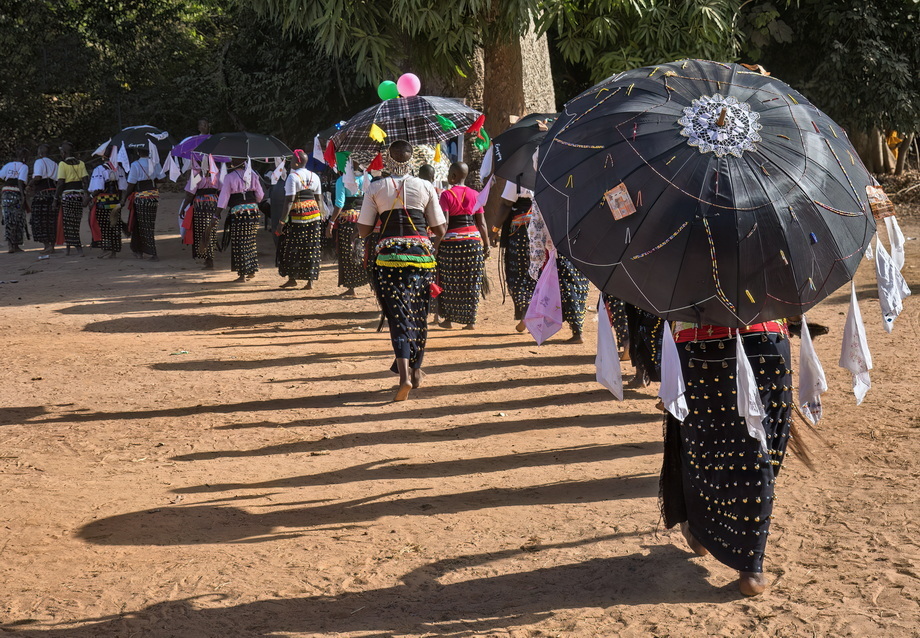
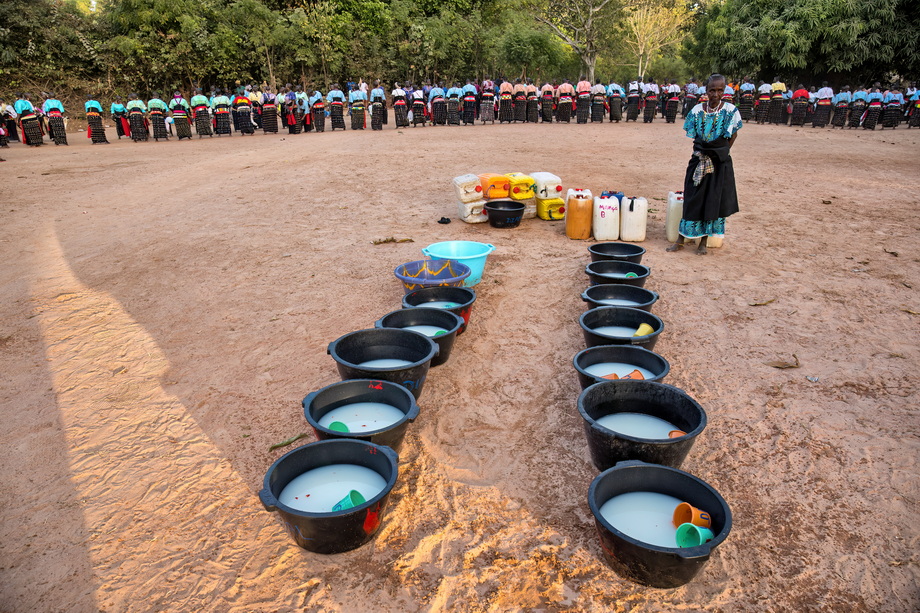
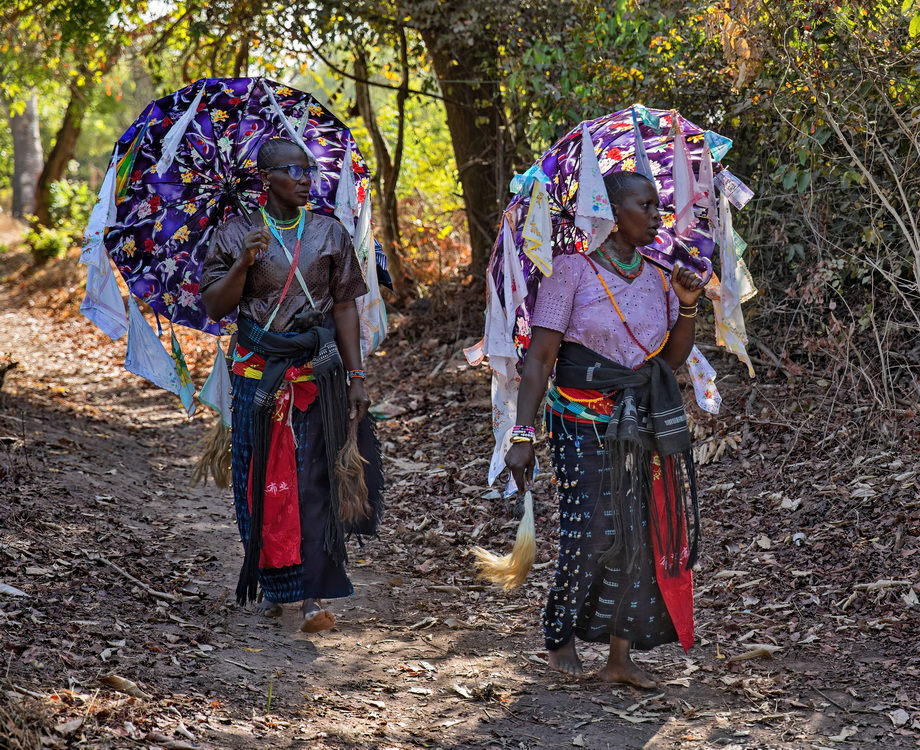
The Karahaye ceremony is closely related to spiritual rites that often focus on the veneration of ancestral spirits. For Diola women, the celebration is especially important because they play an integral role in the religious and cultural life of the community. As key participants in the ritual practices, women may be involved in offerings, prayers, songs, and dances that are intended to honor the spirits and maintain harmony in the community.
The Karahaye celebration also has connections to fertility and womanhood. Women are considered the keepers of family and lineage, and their role in fertility rites is crucial in ensuring the well-being and continuity of the community. Through these celebrations, women not only honor their ancestors but also celebrate their own roles in nurturing life and maintaining cultural traditions.
In Diola society, women often hold roles that include caretaking, farming, and spiritual guidance. During the Karahaye ceremony, they may have specific duties, such as preparing ritual foods, offering sacrifices, or participating in sacred dances. These activities reflect the integral role women play in maintaining the cultural and spiritual fabric of their communities.
During the Karahaye celebration, women often perform important rituals that involve singing, drumming, and dancing. These rituals may take place in sacred spaces like the forest, riverbanks, or other locations that are deemed spiritually significant.
Women may also play a leading role in preparing offerings and performing dances that invoke spiritual blessings for the community, ensuring peace, fertility, and prosperity.
In some Diola communities, young women may undergo initiation into adulthood, which is closely linked to the Karahaye festival. This rite of passage marks the transition from girlhood to womanhood, and the celebration of this moment is filled with rituals, dances, and teachings that emphasize the responsibilities and roles of women in the community. Women may receive special blessings from the spiritual leaders (such as the karahaye) and are often given guidance on marriage, motherhood, and their spiritual duties.
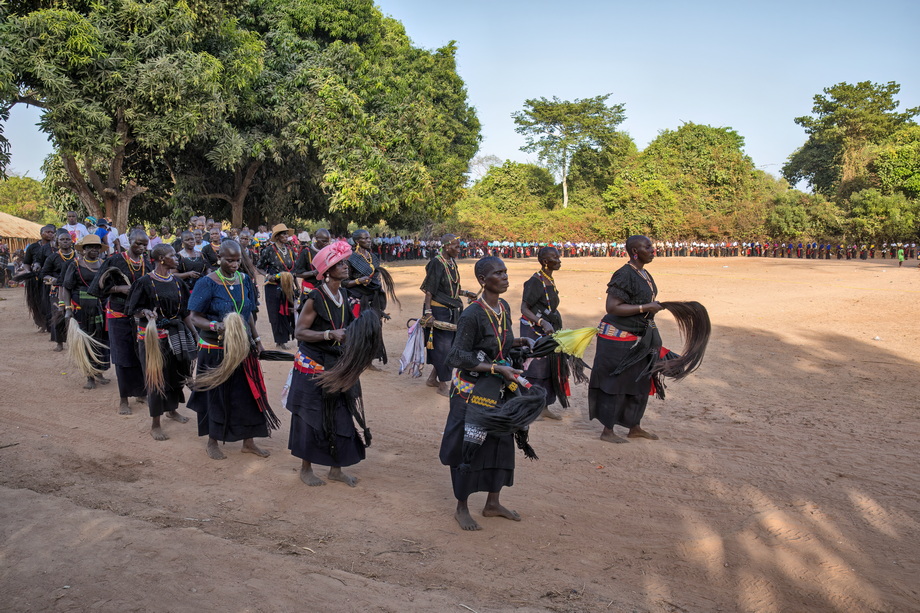
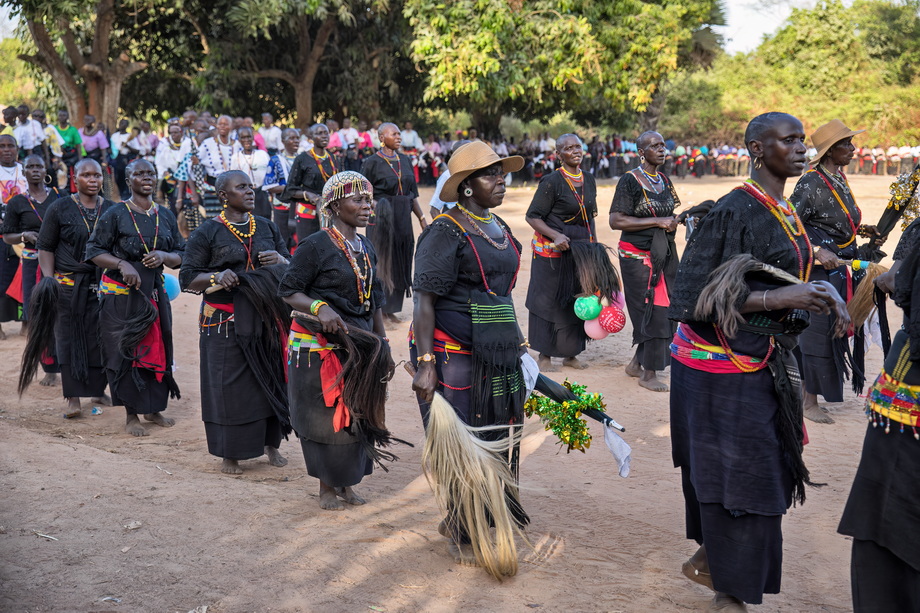
These megaliths were built by the ancestors of the Serer people or of the Jola.The Serer and Jola people believe in a common ancestry and have joking relationship with each other which they assign to their ancient shared cultural heritage. According to the legend of Jambooñ and Againe (an ancient Serer and Jola legend), two sisters boarded a pirogue with their parties. Due to act of nature, the pirogue broke into half at the Point of Sangomar. Those who headed south became the ancestors of the Jola (descendants of Agaire) and those who headed north became the ancestors of the Serer people (descendants of Jambooñ). The Point of Sangomar is one of the sacred Serer sites.
n the mid-1440s the diverse folk population of the Senegambian region faced violent disintegration of its people, and their rich diverse cultures, by the Portuguese, the first Europeans who set out to seek slaves in Africa to sell to the New World. These Europeans came by medium size boats that they used to navigate both the Gambian river and the Casamance rivers, since there were no infrastructures at this time to travel by land, invaded and took them to work in Spain and in Portugal. Later in the sixteenth century, when these European realized that they could make enormous profit by using the labour of the Africans to exploit the wealth of the Americas they started selling the African slaves to North America, Central America, South America, and the Caribbean countries to provide slave labour in the gold and silver mines and on the agricultural plantations, growing crops such as sugar, cotton, rice, and tobacco.
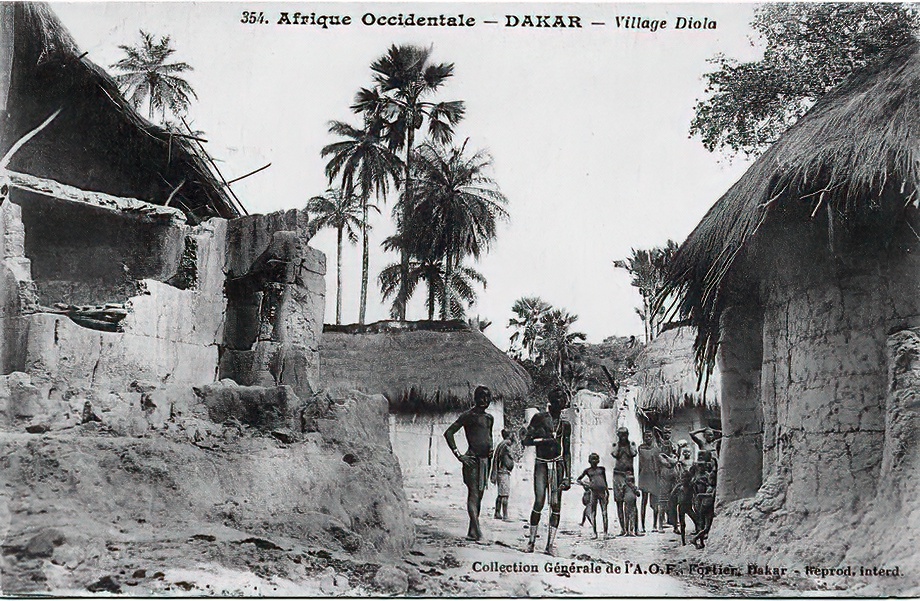
From 1445 to 1600 about one million Africans were taken from the West African region, particularly from the Senegambian region. The ethnic groups that suffered most during this slave aggression were those living along the coastal areas of the river Gambia and the river Cassamance, and these are the Manjagos, the Balantas, the Papels and the Jolas. There is still a very old saying among the elderly Jolas that the music of the Akonting in its initial stage was so sweet to the devils that the most outstanding Jola Akonting players who played late at night in the rice fields when work was suspended for the day and it was time to play the Akonting and dance and drink their palm wine until they got tired and then came home, that most of these Akonting players did not come home. On the following day when the people went out to search for them they saw prints of shoes on the ground which they associated with feet of devils because in those days Jolas didn't use shoes or know what shoes looked like. This is how the Jola Ekonting came to the Americas.
Source: