
The Kaleri (or Mabo-Barkul) people are a small ethnic group in northeastern Nigeria, mainly found in parts of Borno State and nearby areas of Bauchi State. They are generally considered part of the wider Chadic-speaking peoples of northern Nigeria. They are often culturally associated or identified with a larger community known as the Kulere.
In many linguistic and ethnographic records, “Kaleri” is closely associated with or treated as a branch/subgroup of the Kulere people (sometimes spelled Kaler/Kaleri). However, there is also a separate “Kaleri” identity in Borno linked to the Biu–Mandara cultural region, so the name can refer to different communities depending on location.
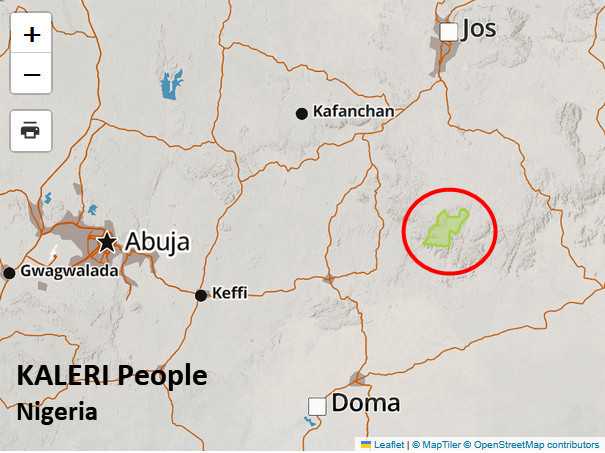
The Kaleri people are one of the smaller ethnic communities of northeastern Nigeria. They are traditionally connected to the hill and savannah regions around southern Borno State and parts of Bauchi State.
Like many groups in the Biu–Mandara area, their history is mostly preserved through oral traditions rather than written records. They are believed to have lived for centuries among neighboring Chadic-speaking peoples, interacting through farming, migration, and trade.
Historically, communities in this region often settled in hilly terrain for protection from slave raids and inter-group warfare during the precolonial era.
The Kaleri language belongs to the Afro-Asiatic language family, specifically the Chadic branch — the same broad family that includes Hausa people languages.
Linguistic Ambiguity: The term "Kaleri language" can refer to either the Bo-Rukul language (spoken by the Mabo-Barkul) or the Horom language.
Multilingualism: Due to geographic proximity, many speak Kulere (An Afroasiatic language), alongside the regional vehicular languages, Hausa and English.
Today, many Kaleri people are Muslim and Christian. Traditional beliefs involving ancestors, spirits, and sacred natural places also survive in cultural customs.
Traditional Kaleri society is centered around:
The Kaleri are primarily an agrarian society. They grow crops like yams, millet, tomatoes, groundnuts, cotton, sorghum, and maize alongside raising cattle and other livestock.
The Kaleri are culturally and geographically linked with several northeastern Nigerian groups, including:
The art of this group from the Jos Plateau falls within the artistic tradition of the Benue River valley. They are internationally known in the tribal art world for their anthropomorphic wooden sculptures:
Before the massive introduction of industrial textiles and the influence of Western or Hausa clothing styles (baban riga), the historical attire documented by anthropologists in the mid-20th century stood out for:
Sources: